

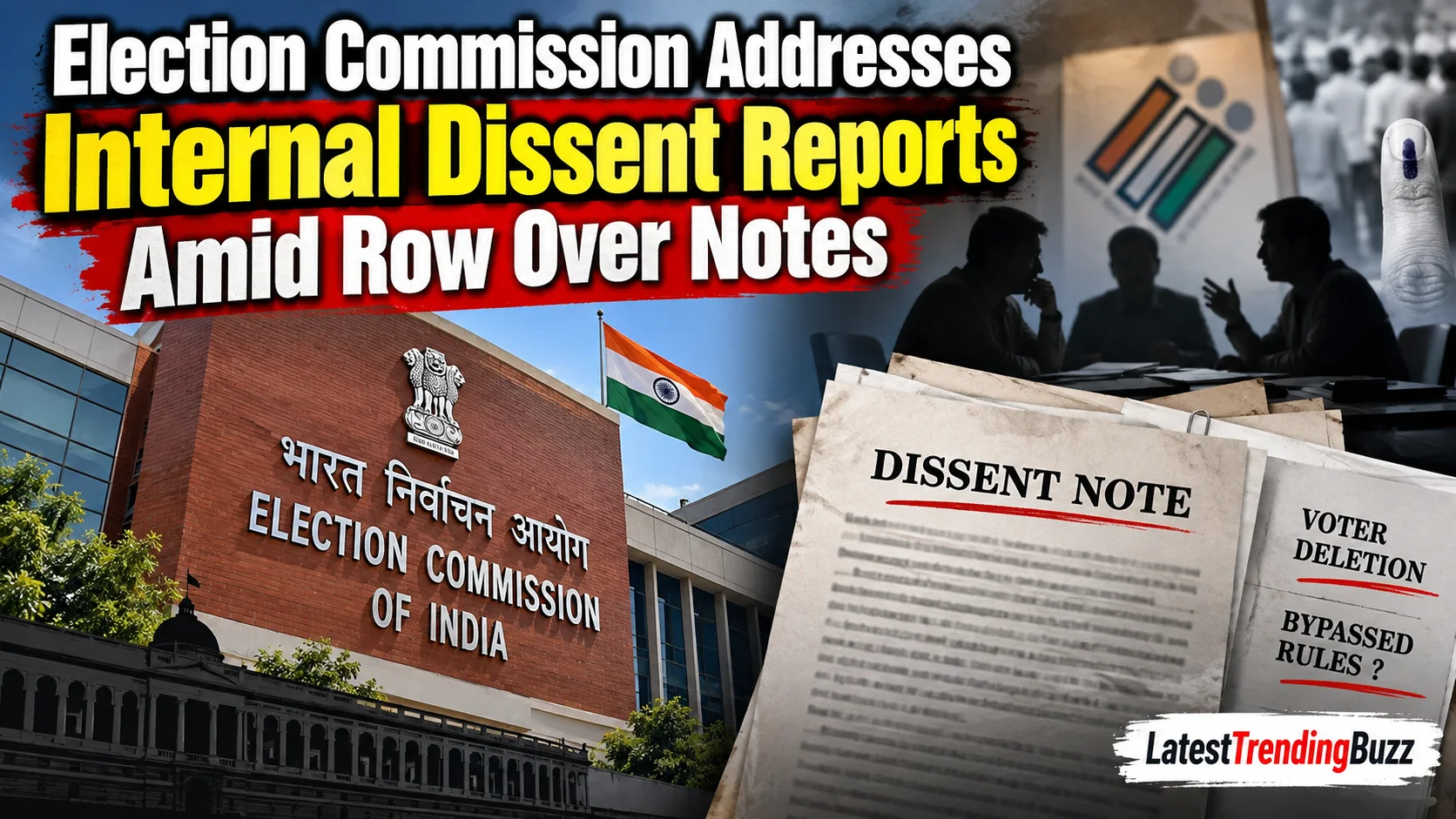
The Election Commission of India (ECI) is currently at the centre of a discussion following reports of internal dissent. These reports indicate the existence of internal notes related to a developing dissent row within the electoral body. The Election Commission has addressed these reports, asserting that selectively highlighting certain internal notes may present an incomplete picture of the situation. This official response from the Election Commission aims to provide context amid discussions concerning an alleged internal rift.
The ongoing discourse surrounding the Election Commission dissent highlights both the official stance of the ECI and claims reportedly detailed in internal communications. The situation involves balancing transparency with the comprehensive understanding of internal administrative processes, particularly in a body central to democratic governance. As these reports circulate, the Election Commission’s statements and the reported claims from dissent notes draw attention to key aspects of its functioning and internal coherence.
Reports of Internal Dissent and the ECI’s Official Stance
Recent media reports have indicated the presence of internal dissent within the Election Commission. This situation has led to public discussion and scrutiny regarding the internal dynamics of the constitutional body responsible for conducting elections. In response to these growing concerns, the Election Commission has issued statements addressing the emerging narrative of an internal rift.
The Election Commission stated that highlighting certain internal notes provides only one side of the overall picture. This assertion suggests that the narrative presented by isolated internal documents might not capture the full context or the complete deliberative process within the Commission. Such an approach could lead to an incomplete or potentially skewed understanding of internal discussions and decisions.
Furthermore, the Election Commission has officially rebutted reports of a rift, aiming to counter the perception of significant internal discord. This official rebuttal seeks to reassure the public and political stakeholders about the unity and functional integrity of the Election Commission. The ECI’s response underlines its intent to manage perceptions surrounding its internal workings, emphasizing that it remains a cohesive body despite the reported emergence of dissenting internal notes.
Reported Claims from Dissent Notes
In contrast to the Election Commission’s official statements, reports have detailed specific claims emerging from internal documents, referred to as “dissent notes.” These notes reportedly highlight an internal rift within the Election Commission and raise critical questions regarding certain operational aspects, particularly those related to the electoral roll.
According to these reported dissent notes, a primary concern revolves around the “mass deletion of voters during SIR.” SIR refers to the Special Summary Revision, a process undertaken by electoral authorities to update voter lists by adding new eligible voters and removing ineligible or deceased ones. The allegation of “mass deletion” suggests that a substantial number of voters might have been removed from the electoral rolls, potentially raising questions about the fairness and comprehensiveness of the voter registration process. Such claims, if substantiated, could have significant implications for the integrity of the voter database and the democratic process itself.
Beyond the issue of voter deletions, the reported dissent notes also mention instances where rules were allegedly “bypassed.” This claim suggests that established procedures, guidelines, or legal frameworks governing the Election Commission’s operations may have been circumvented in certain decisions or actions. The bypassing of rules, if proven, could indicate irregularities in governance and decision-making processes, potentially undermining the ECI’s role as an impartial and rule-bound body. The nature and specific instances of these alleged bypassed rules, however, are not explicitly detailed in the provided information.
The cumulative effect of these reported claims from the dissent notes is to flag an “internal rift” within the Election Commission. This implies a significant disagreement or division among members or officials within the ECI on crucial matters of procedure, policy, or the interpretation of rules. The existence of such a rift, even if reported through unattributed notes, suggests underlying tensions and differing viewpoints on the handling of critical electoral functions. The seriousness of these allegations necessitates a clear understanding of their details and the Election Commission’s full response to them to maintain public confidence in the electoral system.
The Election Commission’s Comprehensive Rebuttal and Context
The Election Commission’s response to the reports of internal dissent and an alleged rift has been consistent in its message: to provide a broader context and rebut the notion of a fundamental breakdown in its internal operations. When the ECI states that “highlighting certain internal notes gives only one side of the picture,” it implies several aspects of internal functioning and decision-making within a complex institution.
Firstly, the ECI’s statement suggests that internal notes are part of a continuous deliberative process. In any large administrative body, officials often record their views, objections, or alternative proposals on various matters. These notes serve as part of an internal consultation mechanism before a final decision is reached. A single note, therefore, may represent a specific viewpoint at one stage of discussion rather than the final consensus or the full range of considerations that led to a particular outcome. The Election Commission’s assertion could be interpreted as a call to view such documents within the entire framework of its decision-making, including subsequent deliberations, amendments, or majority decisions that might not be fully reflected in isolated notes.
Secondly, the Election Commission’s rebuttal of “rift reports” reflects an effort to maintain public trust in its institutional integrity. The ECI is a constitutional body expected to function with impartiality and unity, especially given its critical role in India’s democratic process. Acknowledging or confirming a significant internal rift could potentially erode public and political confidence. Therefore, the ECI’s stance is to present a united front and to emphasize that any internal disagreements are part of a healthy, democratic process of deliberation, rather than indicative of a deep-seated institutional conflict that impairs its functioning. This approach seeks to differentiate between typical bureaucratic processes of debate and a severe organizational split.
The phrase “rebuts rift reports” indicates a formal denial or counter-argument against the claims of widespread internal discord. This public posture is crucial for the Election Commission, which operates under public scrutiny, particularly from political parties and civil society organizations. The ECI’s communication strategy appears aimed at managing the narrative by clarifying that internal discussions, even those containing dissenting viewpoints, are standard operational procedures and not reflective of an unmanageable crisis or fundamental disagreement on core principles of electoral governance. It underscores the Election Commission’s attempt to control the interpretation of internal events and maintain its authoritative image.
WhatsApp Getting Banned in India?
Context of Internal Notes and Decision-Making Processes
The existence of internal notes within the Election Commission is a verified fact, and these documents are integral to the ongoing dissent row. In any large administrative body, internal notes serve various purposes, including recording dissenting opinions, raising concerns, proposing alternatives, or documenting the rationale behind specific decisions. They are typically part of a robust internal deliberation process designed to ensure thorough consideration of all angles before policies are finalized or actions are taken.
The reports suggest that specific internal notes contain criticisms related to the “mass deletion of voters during SIR” and allegations of “bypassed rules.” This indicates that, at some stage of the decision-making process, certain officials or departments within the ECI may have expressed reservations or objections regarding these issues. While the dossier does not specify the authors of these dissent notes, their existence confirms that not all decisions may have been met with unanimous agreement internally.
The Election Commission’s assertion that highlighting these notes presents “only one side of the picture” is a crucial aspect of understanding this context. It implies that these notes represent individual or minority viewpoints within a larger, more complex process where multiple perspectives are considered, debated, and ultimately, a consensus or majority decision is reached. The ECI’s official stance suggests that focusing solely on these dissenting notes might ignore the broader context of discussions, the eventual rationale for final decisions, or other supporting viewpoints that are part of the complete internal record.
Understanding the full implications of the Election Commission dissent requires delving into the nature of these internal documents. They are typically internal communications, not necessarily intended for public release in isolation. Their reported emergence into the public domain has triggered the current discussion, prompting the ECI to clarify its position and to address the questions raised by the contents of these notes. The discrepancy between the specific claims in the reported dissent notes and the ECI’s overall rebuttal forms the core of the current public debate, highlighting different interpretations of internal institutional health and procedural adherence.
Unresolved Questions and Future Considerations
The ongoing discourse surrounding the Election Commission dissent leaves several critical questions unresolved, which are essential for a complete understanding of the situation and for upholding public confidence in the institution. These areas represent gaps in publicly available information that, if clarified, could shed more light on the reported internal rift and the ECI’s operational integrity.
One primary unresolved question is: What specific internal notes are being highlighted in the dissent row? While the existence of internal notes is confirmed, the exact documents, their dates, and the specific context in which they were written remain publicly unclear. Knowing the specific notes would allow for a more precise evaluation of the claims made within them and their relation to the broader internal discussions of the Election Commission. Without this detail, the public and media rely on reported summaries, which the ECI itself suggests may be a “one-sided picture.”
Another significant query pertains to: What are the detailed contents of the ‘rift reports’ that the Election Commission is rebutting? The ECI has formally rebutted these reports, but the specific accusations or areas of disagreement constituting this ‘rift’ are not fully elaborated. A more detailed understanding of what is being alleged as a ‘rift’ would enable a more informed assessment of the Election Commission’s rebuttal. This includes understanding the precise nature of the disagreements and their impact on the ECI’s collective functioning.
A third crucial area requiring clarification is: What is the Election Commission’s full explanation or justification regarding the ‘mass deletion of voters during SIR’ and the alleged ‘bypassed’ rules? The dissent notes reportedly highlight these two specific concerns. The Election Commission’s comprehensive response to these precise allegations is not yet fully public. A detailed explanation from the ECI on its procedures for voter deletion during the Special Summary Revision (SIR) and a clarification regarding the instances and reasons for any alleged bypassing of rules would be vital for accountability and transparency. This would directly address the core procedural concerns raised by the reported internal notes.
Finally, a key question remains: Who authored or submitted the ‘dissent notes’? The dossier indicates the existence of these notes and their content but does not attribute them to any specific individual or group within the Election Commission. Identifying the authors, even if not publicly named, could provide context regarding their roles, perspectives, and the institutional weight of their concerns. This information could help in understanding the hierarchy and the channels through which such dissent is expressed internally, and how it is typically addressed within the ECI’s administrative framework. Addressing these unresolved questions is crucial for fostering continued public trust and ensuring transparent governance in electoral matters.